1
/
of
2
My Store
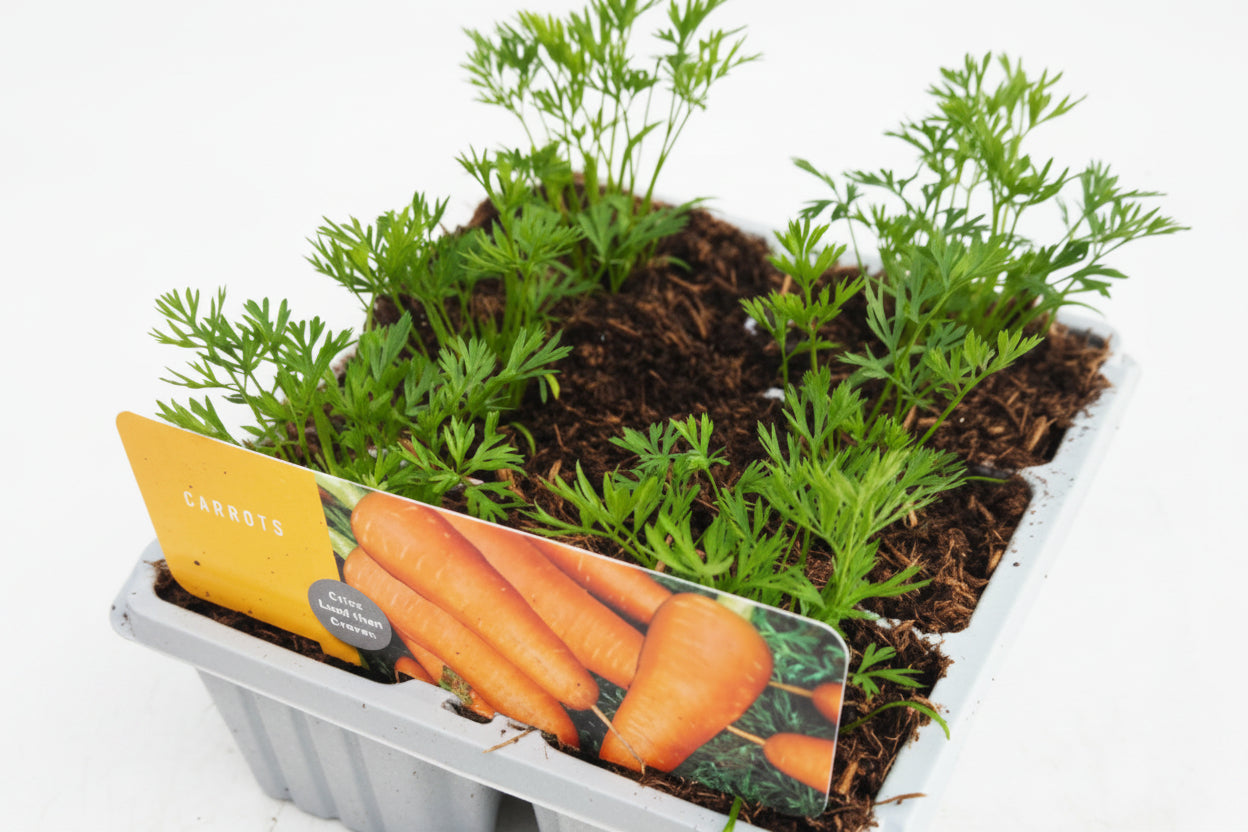
x10 Carrot Flyaway - Vegetable Transplants
x10 Carrot Flyaway - Vegetable Transplants
Regular price
£10.99 GBP
Regular price
Sale price
£10.99 GBP
Unit price
/
per
Tax included.
Couldn't load pickup availability
Carrot plants (Daucus carota) are biennial herbaceous plants that are primarily grown for their edible taproots, which are commonly orange in color but can also be found in purple, red, yellow, and white varieties. Here are some key points about carrot plants:
1. Growing Conditions
- Soil: Carrots prefer loose, well-drained sandy loam or loamy soils. Heavy clay soils can hinder root development.
- pH: The ideal soil pH for carrots is between 6.0 and 6.8.
- Temperature: Carrots thrive in cool weather. They germinate best at temperatures between 55°F and 75°F (13°C to 24°C).
2. Planting
- Sowing: Carrot seeds are typically sown directly into the ground. They can be planted in spring and fall, depending on the climate.
- Spacing: Seeds should be sown in rows about 12-18 inches apart, with seeds sown about 1-2 inches apart within the rows.
3. Care and Maintenance
- Watering: Carrots need consistent moisture, especially during germination and root development. However, overly wet conditions can lead to rot.
- Weeding: Carrots have a slow germination rate, making them susceptible to weeds. Mulching can help suppress weed growth and retain moisture.
4. Pests and Diseases
- Pests: Common pests include carrot flies, aphids, and nematodes. Crop rotation and barriers can help manage these pests.
- Diseases: Carrots can be affected by fungal diseases, such as downy mildew and Alternaria leaf blight. Good airflow and proper watering practices can mitigate these issues.
5. Harvesting
- Carrots are usually ready to harvest in 60 to 80 days after planting, depending on the variety. They can be harvested when they reach a suitable size.
- To harvest, gently loosen the soil around the roots and pull them up carefully to avoid breaking them.
6. Storage
- Carrots can be stored in a cool, dark place for several weeks. They can also be refrigerated to prolong freshness.
7. Nutritional Value
- Carrots are rich in beta-carotene, fiber, vitamin K1, potassium, and antioxidants, making them a healthy addition to the diet.
Share